by David Quilty | Jan 30, 2020 | MariaDB, MySQL, Webinars
At the moment, MySQL 8 and MariaDB 10.4 are the latest versions of the corresponding database management systems. Each of these DBMS has a unique set of features. For example, specific MariaDB features might be unavailable in MySQL, and vice versa. In this...
by Vadim Tkachenko | Jan 23, 2020 | MySQL, Percona Software
From the initial release, one of the biggest complaints I had about Group Replication is that it allowed “stale” reads and there was no way to prevent them or to even know that you read “stale” data. That was a huge limitation. Thankfully, Oracle released features to...
by Yves Trudeau | Jan 22, 2020 | Insight for DBAs, MySQL, Percona Software, Storage Engine
As the second part of the earlier post Give Love to Your SSDs – Reduce innodb_io_capacity_max! we wanted to put together some concepts on how InnoDB flushing works in recent Percona Server for MySQL versions (8.0.x prior to 8.0.19, or 5.7.x). It is important to...
by Daniel Guzmán Burgos | Jan 21, 2020 | Cloud, MySQL, Percona Software, ProxySQL
Being that Amazon is one of the most-used cloud vendors, it is only natural that one may ask “How can Kubernetes be used in AWS?”. And the answer is – not that different than with other cloud vendors. What one needs is two things (and this applies...
by Peter Zaitsev | Jan 20, 2020 | Monitoring, MySQL, Percona Software
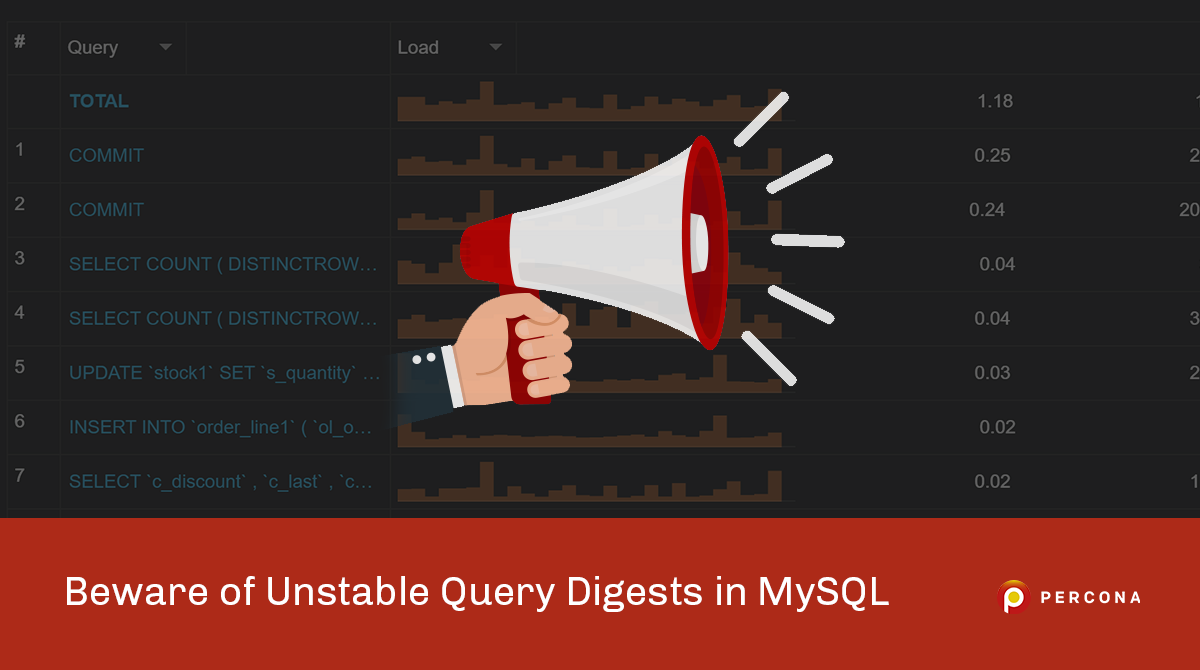
If you’re using MySQL’s Performance Schema you may use “query digests” as IDs to identify specific query patterns in the events_statements_summary_by_digest Performance Schema Table. You might assume these hashes are stable between different versions, so, for example,...
by Vadim Tkachenko | Jan 17, 2020 | MySQL, Percona Software
Percona Server for MySQL 8.0.18 ships all functionality to run Group Replication and InnoDB Cluster setups, so I decided to evaluate how it works and how it compares with Percona XtraDB Cluster in some situations. For this I planned to use three bare metal nodes, SSD...
by Agustín | Jan 15, 2020 | MySQL, Percona Software
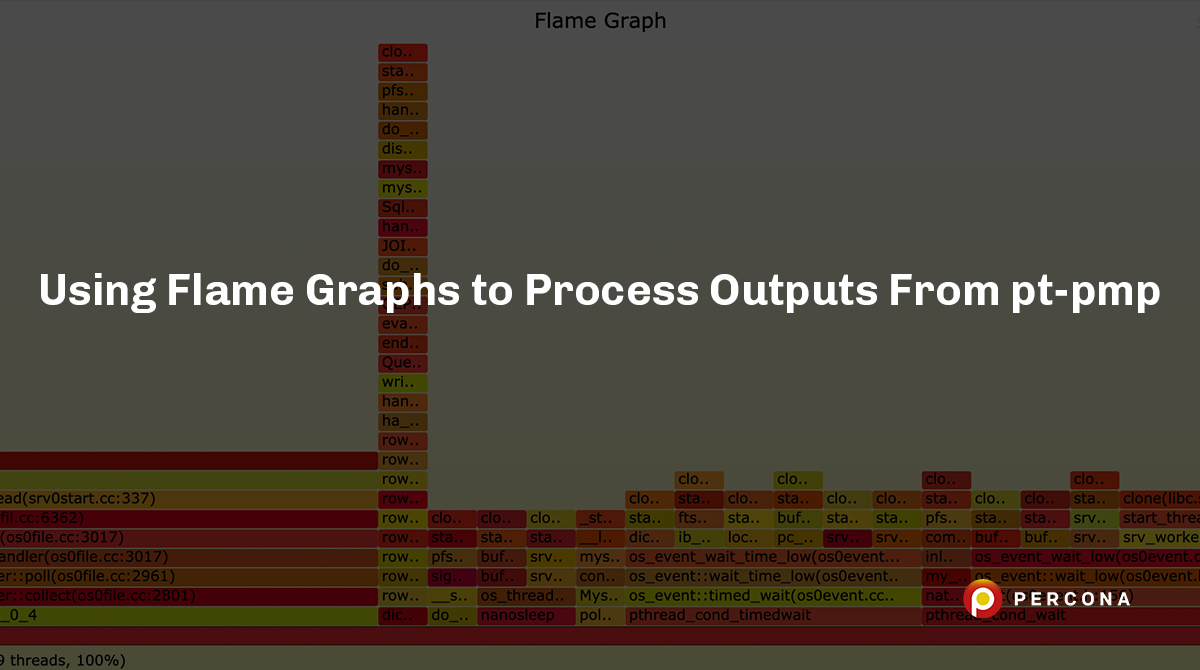
In a previous post Profiling Software Using perf and Flame Graphs, we took a look at how to generate Flame Graphs from perf outputs. In this short follow-up, we will use Flame Graphs to process outputs from pt-pmp. Flame Graphs were not originally thought of for this...
by Alkin Tezuysal | Jan 15, 2020 | Cloud, Insight for DBAs, MySQL
In this blog post, we will continue to explore Vitess and test an example database provided in its repository. This is Part III of the previously discussed installation of Vitess on minikube environment, so please make sure to follow those steps to bring the cluster...
by Alkin Tezuysal | Jan 14, 2020 | Cloud, Insight for DBAs, MySQL
In this blog post, I’d like to share some experiences in setting up a Vitess environment for local tests and development on OSX/macOS. As previously, I have presented How To Test and Deploy Kubernetes Operator for MySQL(PXC) in OSX/macOS, this time I will be showing...
by Alok Pathak | Jan 14, 2020 | Cloud, Insight for DBAs, MySQL
The promise of DBaaS like RDS is to reduce operational overhead (among other things) and one of the stellar cases is upgrades (major and minor). The suggested procedure involves just a couple of steps. For example, using AWS Console, you can enable “Auto minor...
by Peter Zaitsev | Jan 13, 2020 | MySQL, Storage Engine
A few days ago I wrote about how grossly outdated statistics returned through MySQL’s Information_Schema can be. In that post, Øystein Grøvlen suggested taking a look at mysql.innodb_table_stats and mysql.innodb_index_stats as a better source of information. Let’s do...
by David Quilty | Jan 13, 2020 | MySQL, Webinars
During this webinar, we will review the MySQL 8.0 upgrade process. In this deep dive session, we will review the latest version of MySQL 8.0, discuss upgrade challenges, bugs, gotchas and how to successfully upgrade to MySQL 8.0. Please join Percona Senior Technical...
by Alkin Tezuysal | Jan 13, 2020 | Cloud, Database Trends, Insight for DBAs, MySQL
In this blog post series, we will discuss an overview of Vitess technology. Vitess is a database clustering solution for horizontal scaling of data sets currently suitable to 250Gb – 300Gb in sizes*. It’s a proven technology used by several web-scale companies...
by Marco Tusa | Jan 10, 2020 | MySQL, Percona Software
In the many years we have used MySQL, we got accustomed to the fact that upgrades from MySQL 5.7.11 to 5.7.12 was a minor event. This meant that if something was going wrong, we could roll back the binaries and be happy again. From MySQL 8, this is no longer true....
by Walter Garcia | Jan 10, 2020 | MySQL, Percona Software, ProxySQL
If you are thinking of using ProxySQL in our Percona XtraDB Cluster environment, I’ll explain how to use ProxySQL 2 for failover tasks. How to Test ProxySQL uses the “weight” column to define who is the WRITER node. For this example, I’ll use...
by Daniel Guzmán Burgos | Jan 9, 2020 | MySQL, Percona Software
The importance of having periodic backups is a given in Database life. There are different flavors: binary ones (Percona XtraBackup), binlog backups, disk snapshots (lvm, ebs, etc) and the classic ones: logical backups, the ones that you can take with tools like...
by Peter Zaitsev | Jan 8, 2020 | MySQL
MySQL obviously got many things right, otherwise, it would not be the World’s Most Popular Open Source Database (according to DB-Engines). Sometimes, however, I run into some decisions or behaviors which are just plain bad designs. Many such designs have a lot of...
by Vinicius Grippa | Jan 8, 2020 | Monitoring, MySQL
Percona Monitoring and Management (PMM) has been on the road for a while now, and it brings exciting new features and improvements. For those who are not familiar with the tool, PMM allows deep insight into the performance of applications and databases. The most...
by Ananias Tsalouchidis | Jan 7, 2020 | MySQL, Security
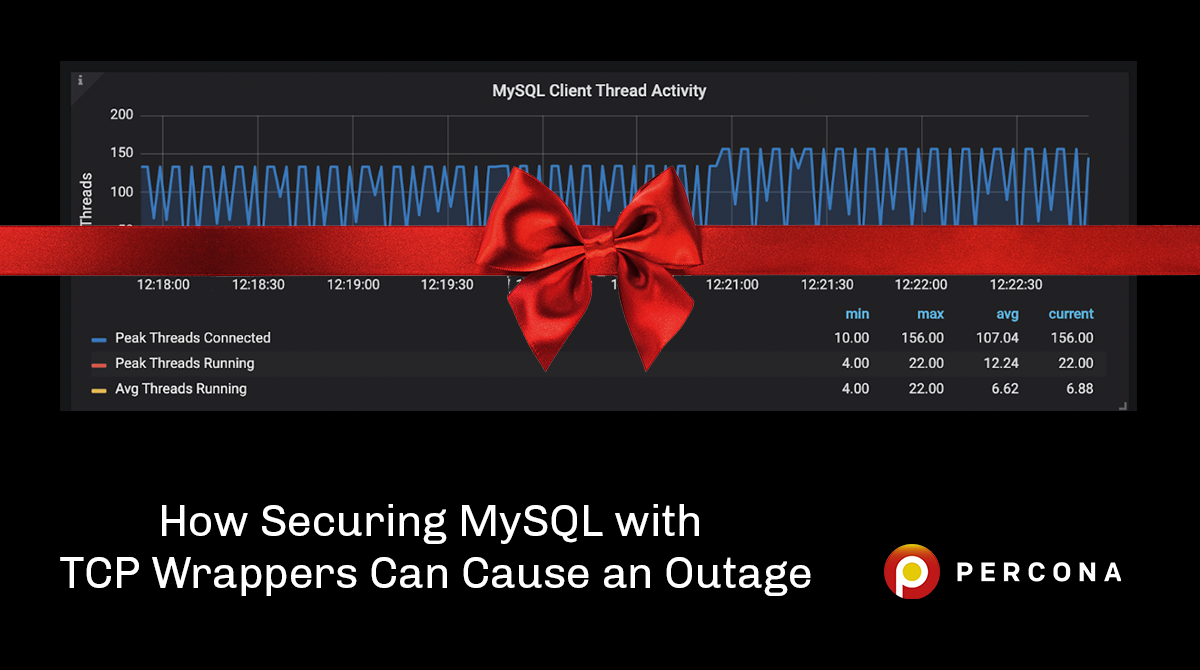
The Case Securing MySQL is always a challenge. There are general best practices that can be followed for securing your installation, but the more complex setup you have the more likely you are to face some issues which can be difficult to troubleshoot. We’ve recently...
by Michael Patrick | Jan 6, 2020 | Database Trends, Insight for DBAs, Percona Services
So, what do you do when you love technology but are ready for a change in the day-to-day activities of a DBA? One consideration is to become a Technical Account Manager, or TAM for short. At Percona, a TAM is an account manager who is also technical (the big...