by Natalia Marukovich | Jul 6, 2022 | Cloud, MongoDB, MySQL, Percona Software, PostgreSQL
There are several ways to manage storage in Percona Kubernetes Operators: Persistent Volume (PV), hostPath, ephemeral storage, etc. Using PVs, which are provisioned by the Operator through Storage Classes and Persistent Volume Claims, is the most popular choice for...
by Zsolt Parragi | Jul 6, 2022 | Cloud, MySQL, Percona Software
Percona Server for MySQL 8.0.28-20 introduces a new keyring component, component_keyring_kms, which allows using the AWS Key Management Service as a keyring. The component is also included in Percona XtraBackup 8.0.28, allowing backing up databases encrypted with this...
by Zsolt Parragi | Jul 5, 2022 | Insight for DBAs, MySQL, Percona Software
The MySQL error log is usually used to store and later analyze error and warning messages, but in some cases, it is also used for high throughput debug messages for analyzing complex issues. These messages take up more space, slow down the server, and also make the...
by David Stokes | Jun 30, 2022 | Insight for DBAs, MySQL, PostgreSQL
Many MySQL DBAs have expressed interest in learning about PostgreSQL and this series is a guided tour through the basics. One of the ‘Wow! That is Different!’ things for MySQL DBAs looking at PostgreSQL are sequences. Sequences can be used as a rough...
by David Stokes | Jun 21, 2022 | Insight for DBAs, MySQL, PostgreSQL
The videos for PostgreSQL for MySQL Database Administrators (DBA) episodes three and four are live here and here. Episode three covers a simple backup and restoration while episode four covers some handy PSL commands. For those of you who missed the first two videos...
by David Ducos | Jun 3, 2022 | Insight for DBAs, MySQL
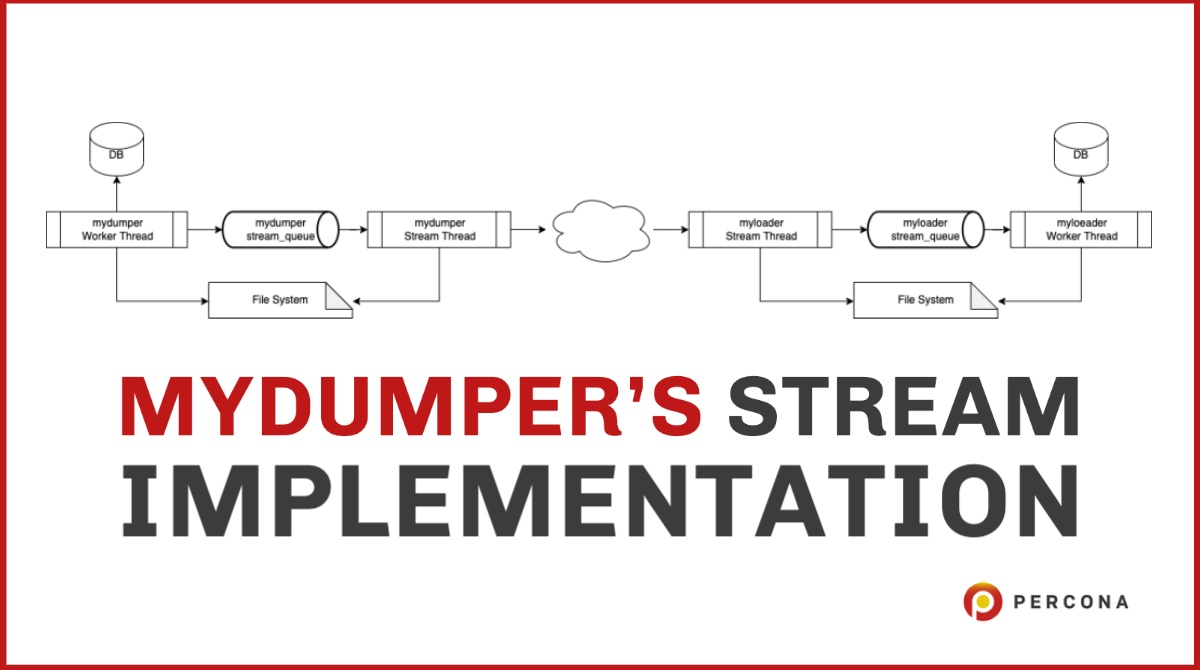
As you might know, mysqldump is single-threaded and STDOUT is its default output. As MyDumper is multithreaded, it has to write on different files. Since version 0.11.3 was released in Nov 2021, we have the possibility to stream our backup in MyDumper. We thought for...
by IP | Jun 1, 2022 | Insight for DBAs, MySQL, Percona Software, ProxySQL
Temporary Tables handling in MySQL has a somewhat checkered past. Some time ago, my colleague Przemek wrote a post about differences in the implementations between versions of MySQL. If you are looking for the differences in implementation, that’s a perfect...
by Przemysław Malkowski | May 26, 2022 | Insight for DBAs, MySQL
The binary logging format in MySQL has been ROW by default since MySQL 5.7, yet there are still many users sticking with STATEMENT or MIXED formats for various reasons. In some cases, there is just simple hesitation from changing something that has worked for years on...
by David Stokes | May 26, 2022 | Insight for DBAs, MySQL, Open Source
Last week at Percona Live, I was asked what book I recommend for novices seeking to learn MySQL. For a long time, there has not been a good choice for modern versions of MySQL. Luckily I had just stumbled upon such a book. Now I am happy to recommend The MySQL...
by Zsolt Parragi | May 25, 2022 | Insight for DBAs, MySQL, Percona Software, Security
MySQL allows changing the location of the general log and the slow query log while the server is running by anybody having the SYSTEM_VARIABLES_ADMIN privilege to any location, including appending to existing files. In Percona Server for MySQL 8.0.28-19 we introduced...
by Nickolay Ihalainen | May 24, 2022 | Cloud, MongoDB, Monitoring, MySQL, Percona Software
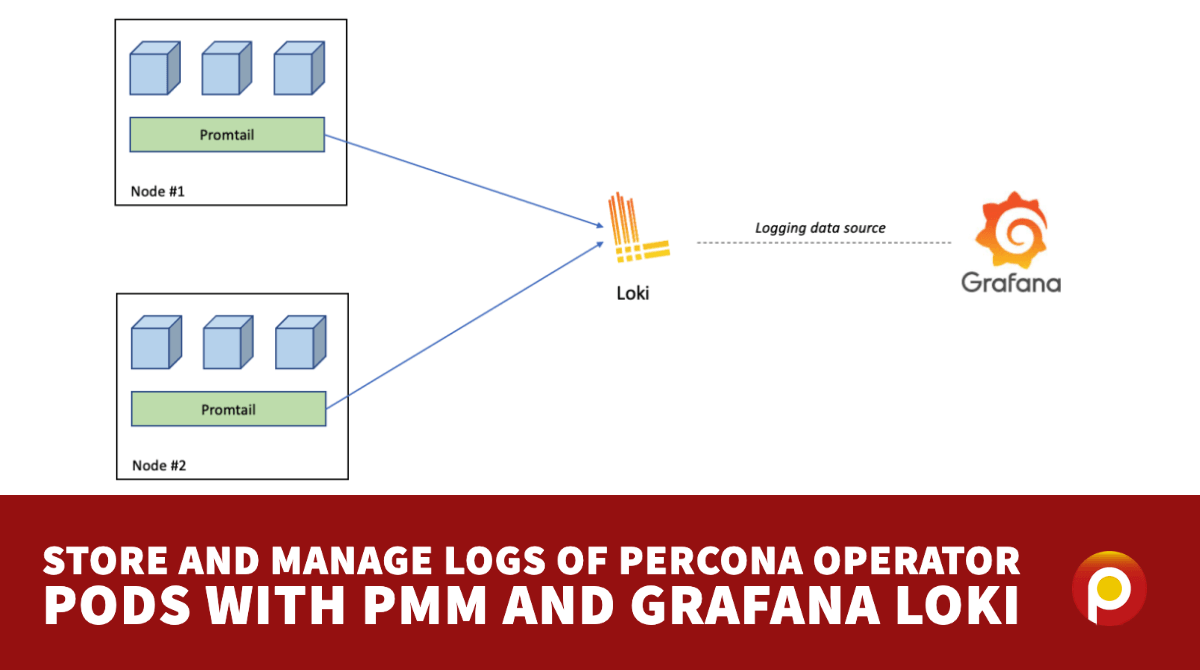
While it is convenient to view the log of MySQL or MongoDB pods with kubectl logs, sometimes the log is purged when the pod is deleted, which makes searching historical logs a bit difficult. Grafana Loki, an aggregation logging tool from Grafana, can be installed in...
by Marcelo Altmann | May 9, 2022 | MySQL, Percona Software
Earlier last week, Oracle released their Q2 releases series. Unlike previous releases, backward compatibility has now been broken with previous versions of MySQL. MySQL 8.0.29 extended the support for the online DDL algorithm INSTANT. Prior to 8.0.29 only adding...
by David Ducos | May 9, 2022 | Insight for DBAs, MySQL
The new MyDumper 0.12.3-1 version, which includes many new features and bug fixes, is now available. You can download the code from here. MyDumper is Open Source and maintained by the community, it is not a Percona, MariaDB, or MySQL product. In this new version we...
by David Stokes | Apr 27, 2022 | Insight for DBAs, MySQL
Oracle released MySQL Server 8.0.29 on April 26th and this is a quick review of the release notes. I have put my own comments in italics. So what is in the ’29 release of MySQL Server? Does it come festooned with new, neat features or is it a big bug-fix...
by Marco Tusa | Apr 22, 2022 | Cloud, Insight for DBAs, MySQL, Percona Software
In the last quarter of 2021, AWS released Aurora version 3. This new version aligns Aurora with the latest MySQL 8 version, porting many of the advantages MySQL 8 has over previous versions. While this brings a lot of new interesting features for Aurora, what we are...
by Michael Patrick | Apr 20, 2022 | Insight for DBAs, MySQL, Percona Software
When one is responsible for promoting application development from Dev through the various environments such as QA, UAT, etc., through Production, it is often useful to ensure that configurations in test environments are comparable to the final production...
by Kedar Vaijanapurkar | Apr 19, 2022 | MySQL
As a best practice before dropping a large table in MySQL, pt-archiver can be used to delete all the records in batches. This helps to avoid a situation where your server may get stalled under certain circumstances. I recently read a comment from a user saying “The...
by Sergey Pronin | Apr 18, 2022 | Cloud, MySQL, Open Source, Percona Software
Ingress is a resource that is commonly used to expose HTTP(s) services outside of Kubernetes. To have ingress support, you will need an Ingress Controller, which in a nutshell is a proxy. SREs and DevOps love ingress as it provides developers with a self-service to...
by Edwin Wang | Apr 15, 2022 | Insight for DBAs, MySQL
Abstract: By diving into the details of our case study, we will explain how incorrect table statistics may lead the optimizer to choose a suboptimal execution plan. We will also go into how MySQL calculates the table statistics and the ways to correct the table...
by Marco Tusa | Apr 12, 2022 | Cloud, MySQL, Percona Software
Last month I performed a review of the Percona Operator for MySQL Server which is still Alpha. That operator is based on Percona Server for MySQL and uses standard asynchronous replication, with the option to activate semi-synchronous replication to gain higher...