Summary
This article is a detailed analysis of the impact of the Redis license change to a non-open-source one on its community. To summarize the findings:
In March 2024, the super popular open source in-memory database, Redis, caused some serious upset in the open source community and its many users by changing to a proprietary license from BSD-3. A number of maintainers decided to fork Redis, and the Valkey project was born. Interestingly, Redis added an open source license again in May 2025 in the form of AGPL. Rather than going into the why’s of all these changes, we will analyze the impact on the Redis project and its main alternative, Valkey.
The Redis license change was controversial for several interconnected reasons:
Breaking the Open Source Social Contract: Redis had been open source for 15 years, with a community contributing code, documentation, and bug fixes under the assumption it would remain freely available. The sudden shift to a proprietary license felt like a betrayal of this implicit agreement. Additionally, the founder of Redis, Antirez famously wrote in 2018 on his blog (https://antirez.com/news/120) that Redis is and “must be” BSD licensed.
Impact on Cloud Providers and Users: Many companies had built their infrastructure around Redis, choosing it specifically because it was open source. The license change meant:
Community Investment: contributors had donated their time and expertise to improve Redis over the years. The license change meant their contributions would now benefit a proprietary product, which many saw as unfair appropriation of community work.
Precedent Concerns: This was part of a troubling trend in the open source world, following similar moves by Elasticsearch, MongoDB, and others.
Trust and Governance: The unilateral decision-making process, without community consultation, raised questions about project governance and whether users could trust Redis’s future direction.
What does the project impact translate to in actual numbers? With the beauty of open source, the stats are readily available on github. For the purpose of this analysis we will look at the core Redis server and Valkey projects for the past two years, with the notion that Valkey has only been around for 18 months since the fork in March 2024.
Client libraries and modules are a big part of the ecosystem, but since the Redis versions of these have been around for years, and Valkey is somewhat playing catch-up in this area, it would not be a sensible exercise to compare stats. For example, the ValkeySearch, ValkeyLDAP and ValkeyJSON modules have all been built from scratch in the last year, where some of the Redis modules have been around for many years.
How many contributors moved over from Redis to Valkey? In the 4 months up to the fork, Redis had 24 contributors with one or more commits totalling 221 commits. Out of these, 9 no longer committed anything to Redis the following year and 2 reduced their commits and 13 increased their commits. To determine whether a reduction or increase has taken place, this is adjusted for the time period, i.e. the number of commits for 20240401 to 20250401 are divided by 3 since the 20231118 to 20240401 period is roughly 4 months.
This data gains significance when combined with the Valkey commits. Nevertheless, an immediate impact is noticeable in the increase of commits by Redis employees after the fork.
What about new contributors to Redis after the fork? Most notable is of course the return of Antirez to Redis, working amongst others on vector capabilities in Redis, bringing 146 commits since the fork date. Additionally, we see a number of new contributors working for Redis in kei-nan with 22 commits, skaslev with 17, minchopaskal with 16 and even Redis CEO Rowan Trollope with 16 commits. Among non-Redis contributors since the fork is StavRLevi with 12. This confirms that since the fork, the Redis project is mainly maintained by Redis employees.
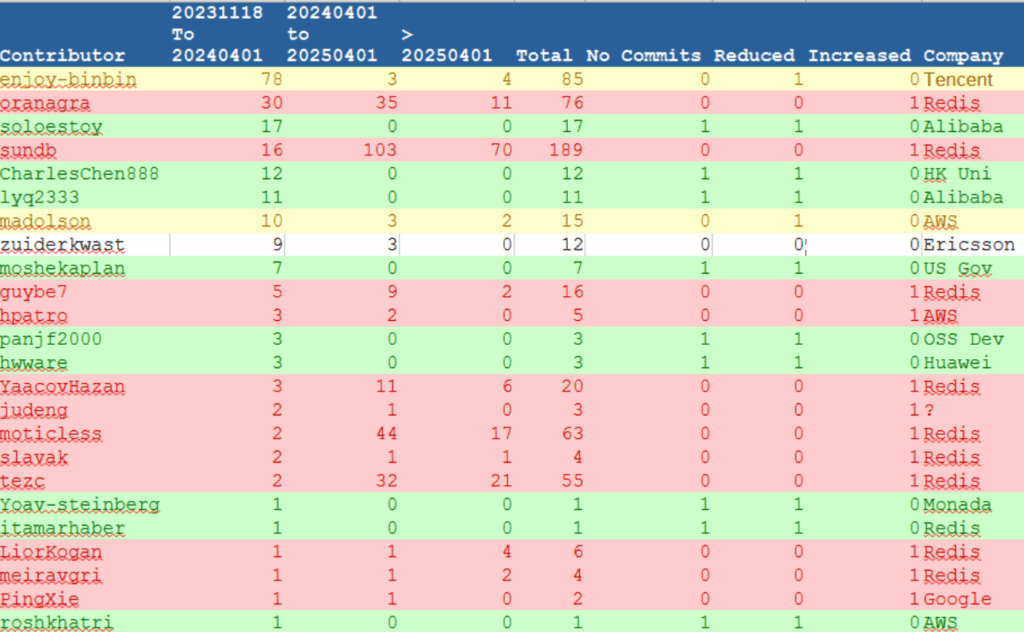
Figure 1: commit history for Redis between 2023118 to 20251119
Green: no commits to Redis post fork
Yellow: reduced commits to Redis post fork
Red: increased commits to Redis post fork
It is clear that the contributors who are Redis employees increased their commits post fork. Arguably, this could be due to the other contributors leaving or because they needed to keep up with the pace of innovation in Valkey.
What have the contributors with either no commits or reduced commits to Redis added to the Valkey project? Zhu Binbin from Tencent, Madelyn Olson from AWS and Victor Soderqvist from Ericsson are the main ones in this category. Between them, they made 289 + 155 +178 commits to Valkey since the fork.
Is the contributor base to Valkey growing? Starting out with 18 contributors in the month after the fork, this has grown steadily to the current 49.
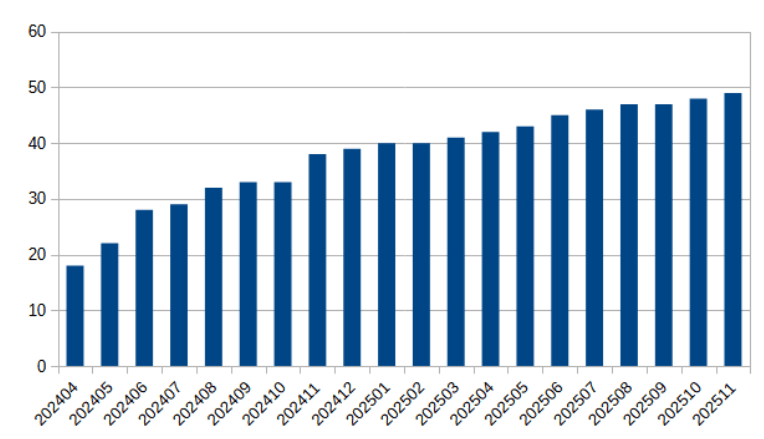
Figure 2: total number of contributors to Valkey by month
Another metric that can be used to measure project activity is the number of issues raised. The findings show that since its inception, Valkey has a higher average number of issues per month at 40 compared to Redis’s 24.
For Redis, the findings can be divided into notable periods :
Mature projects typically show a reduction in issues over time; therefore, PRs are another metric to analyze. For reference, the issue stats for Redis :
For Valkey the total number of issues is of course a lot smaller, with it being a fork of a mature technology but we can still identify notable periods :
Launch Phase (March-May 2024):
Stabilization (June-December 2024):
Current Phase (2025):
For reference :
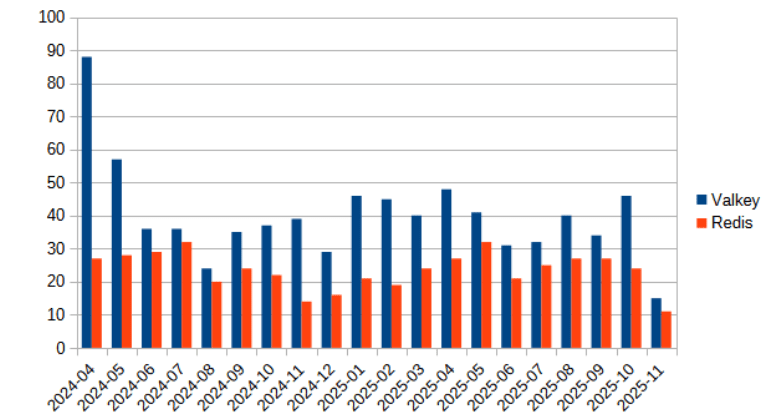
Figure 3: number of issues per month since the fork
Now that we have looked into the issue stats, what does the actual completed work in terms of pull requests look like? If we ignore the first year and only look at 2025 so that we can consider Valkey to be more stable, Valkey’s PRs at an average of 80/month are almost double of Redis’s 42.
A total of 7,307 PRs were created in the period September 2010 – November 2025. From these we can again see some notable periods :
A total of 1,755 PRs were created in the period March 2024 – November 2025. For Valkey the notable periods are :
If we compare the peak periods for both, Redis had between 70 and 120 PRs per month with the current rate for Valkey this year (ignore the launch month) at 46 to 115 PRs per month. For the averages for 2025, Valkey’s is at 80, almost double of Redis’s 42. This is showing a very strong community momentum behind Valkey. In 2025 Valkey created 865 vs Redis 537.
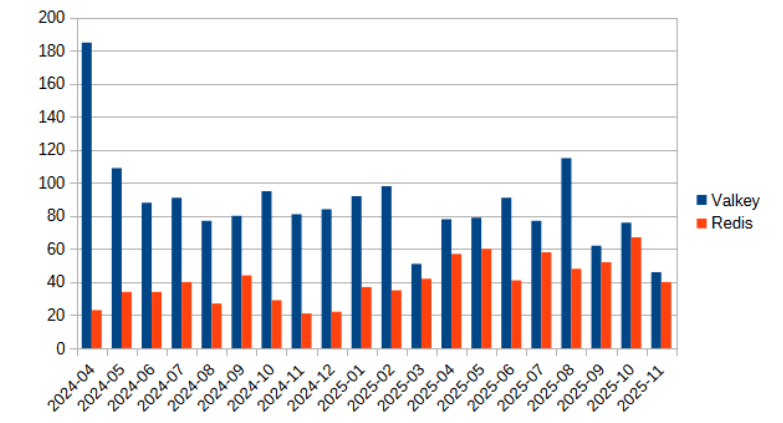
Figure 4: number of issues per month since the fork
The community reacted strongly to the Redis license change in March 2024, with Valkey emerging shortly after and attracting 18 contributors and backing from major tech companies. The return of Antirez to Redis and the adoption of AGPL in May 2025 – whether this was a reaction to the success of Valkey or based on Antirez’s true beliefs – shows that the Redis community was broken. Time will tell if Redis can grow back the community involvement to the pre-fork levels. After all, its open source nature and that involvement that led to its popularity. The analysis in this article demonstrates that Valkey has successfully established itself as a viable alternative with 50 core contributors, 40 issues and 80 PRs per month. This case is an important lesson to open source projects that use license changes to prioritize monetization over community.
All data was collected from the respective github projects. All issues and PRs were included and numbers are aggregated based on the creation date. The metrics are purely based on quantity and not on size or quality.
The BSD-3 license is one of the most permissive open source licenses. It allows anyone to:
For users, this meant complete freedom to use Redis in any project without worrying about licensing obligations.
The AGPL is a “copyleft” license that requires:
For users, AGPL means that while the software remains free, there are stricter obligations about sharing modifications, especially for cloud service providers.
When Redis switched to a dual proprietary license model (RSALv2 and SSPLv1), it meant:
In software development, a “fork” is when developers take a copy of a project’s source code and start independent development on it, creating a separate project. Think of it like a road that splits into two paths – both started from the same place but now go in different directions.
When Valkey was “forked” from Redis, it meant:
Resources
RELATED POSTS