
The increase of cloud-native technologies is transforming how we manage databases. Since I stepped into the world of databases and cloud-native technologies, I have encountered several initiatives aimed at developing and optimizing database operations in the cloud, and Kubernetes plays a crucial role in this shift through Operators. While the core concepts and techniques of databases remain the same, how we deploy and manage databases has evolved.
MongoDB, one of the most popular NoSQL databases, uses sharding to scale horizontally and handle large datasets. However, manually setting up and managing a sharded MongoDB deployment can involve numerous steps and configurations, which can be challenging, especially for users unfamiliar with databases or managing clusters. At least, that was my experience when I tried setting it up manually!
Sharding introduces additional operational considerations, such as maintaining consistency across shards, scaling effectively, and ensuring reliable backups and restores, which can be challenging without the right tools. Discovering tools that simplify the sharding process is always a welcome improvement!
Fortunately, cloud-native solutions and tools simplify the process. This blog shows how the sharding process can be easier and more efficient in Kubernetes by using open source projects and cloud-native tools. These solutions remove the hard work and make managing and scaling your databases easy while saving time and effort.
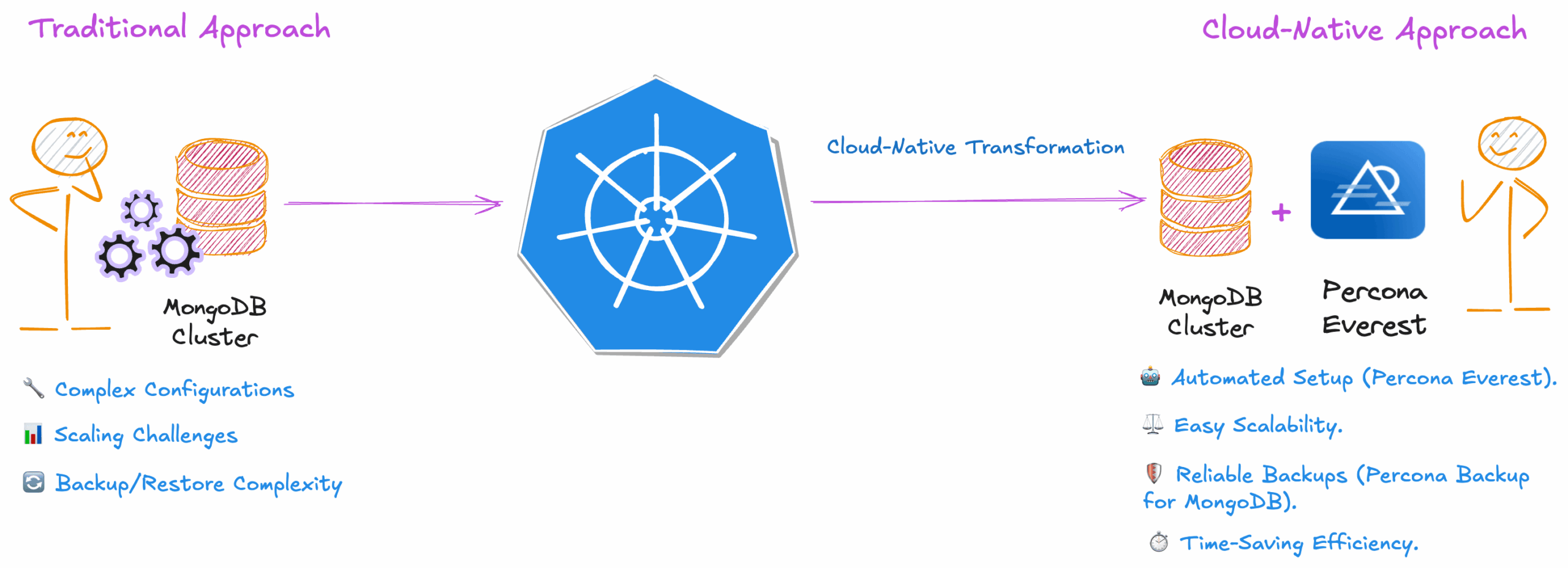
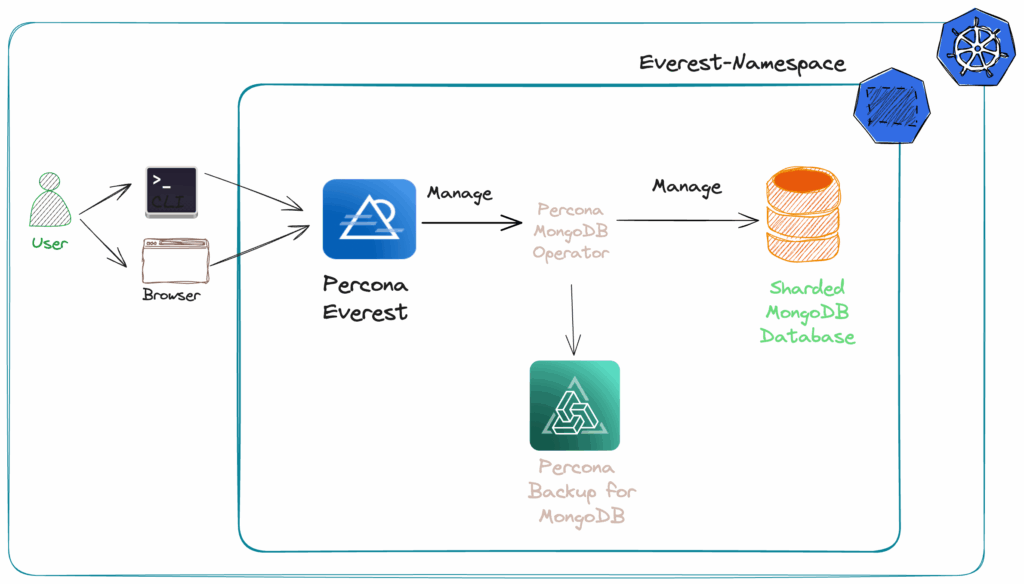
We will use Percona Everest and Percona Backup for MongoDB (PBM). There is no need to install Percona Backup for MongoDB separately, as it is already integrated into Percona Everest through the Percona MongoDB Operator (see image below).
MongoDB sharding is a method for distributing data across multiple servers, which helps improve performance and scalability. The key concept behind sharding is to partition your data into chunks and spread these chunks across different shards (servers).
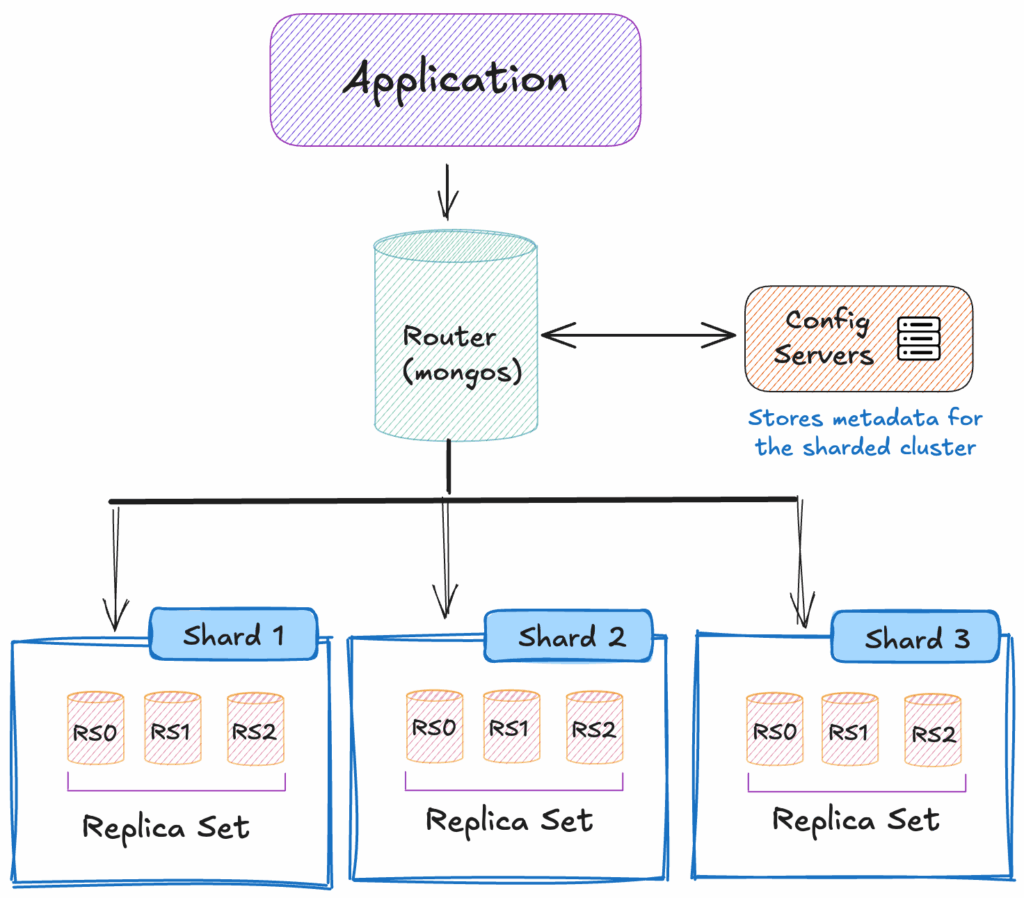
So, what is the relationship between a shard and a replica set?
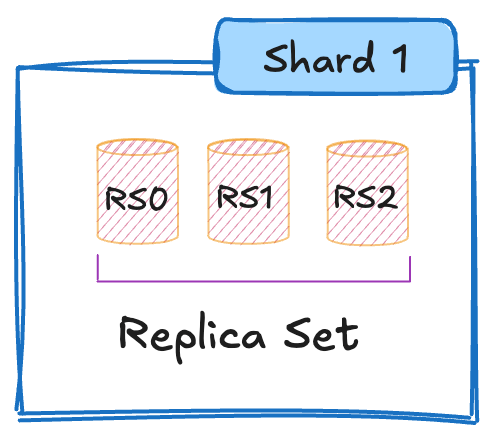
Each shard (RS0, RS1, RS2 ) in a MongoDB cluster is deployed as a replica set to ensure reliability and high availability. A replica set typically consists of one primary instance (handling writes and reads) and multiple secondary instances (replicating data for redundancy). If the primary fails, a secondary can take over automatically. This setup ensures data is replicated across members and remains accessible even in failures.
Percona Everest is a powerful tool for managing MongoDB databases, including sharded clusters. It provides a simplified interface for deploying and scaling MongoDB clusters efficiently.
Example: Deploying a sharded MongoDB cluster with Percona Everest
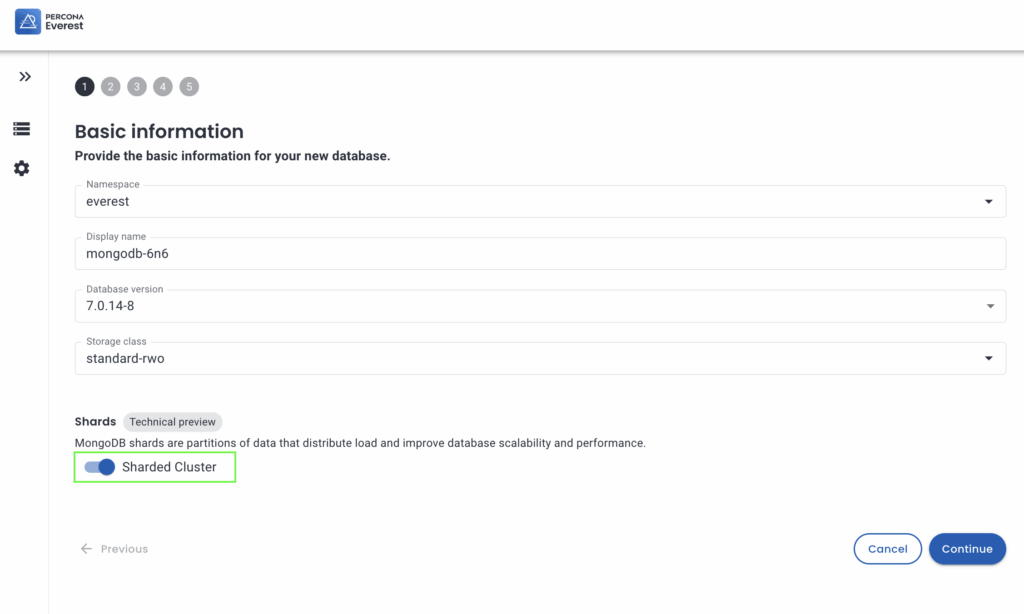
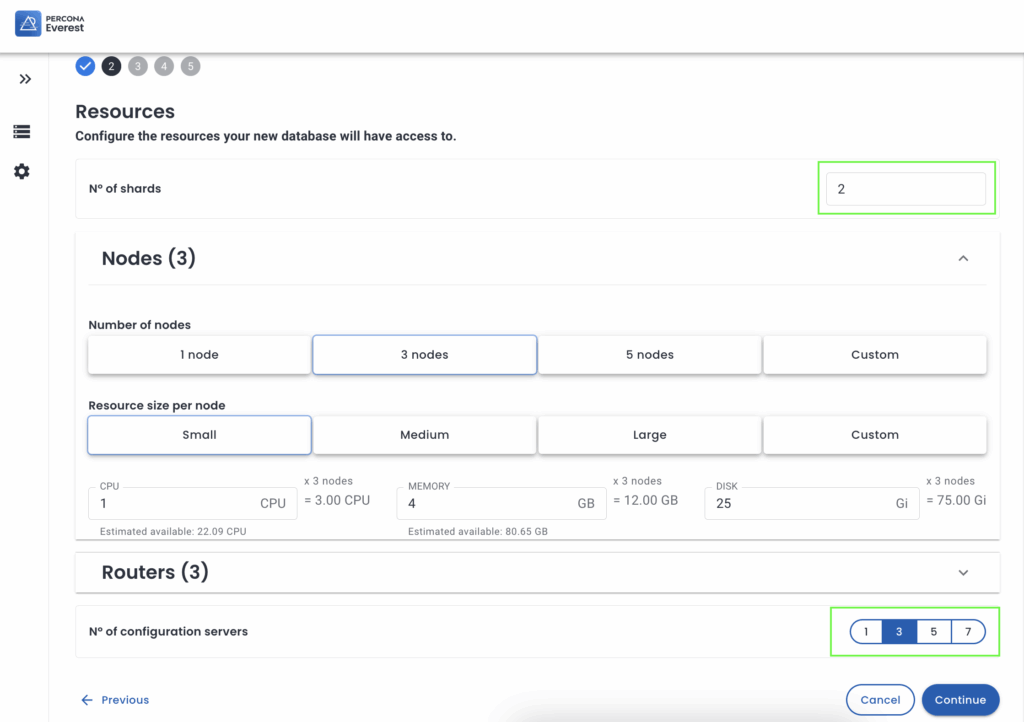
Percona Everest handles the rest, ensuring your MongoDB deployment is optimized for scaling.
Note:
Backing up a sharded MongoDB cluster is an essential aspect of database management.
Percona Everest simplifies the backup and restore management process by integrating the Percona MongoDB Operator, which automatically installs Percona Backup for MongoDB (PBM). This integration ensures you can easily manage backups and restores for your MongoDB clusters, including sharded ones, with minimal configuration.
PBM ensures high availability and data protection while minimizing performance impact.
To set up backups, you must complete additional steps in Percona Everest.
The Percona Everest documentation provides more detailed instructions on configuring and managing on-demand backups.
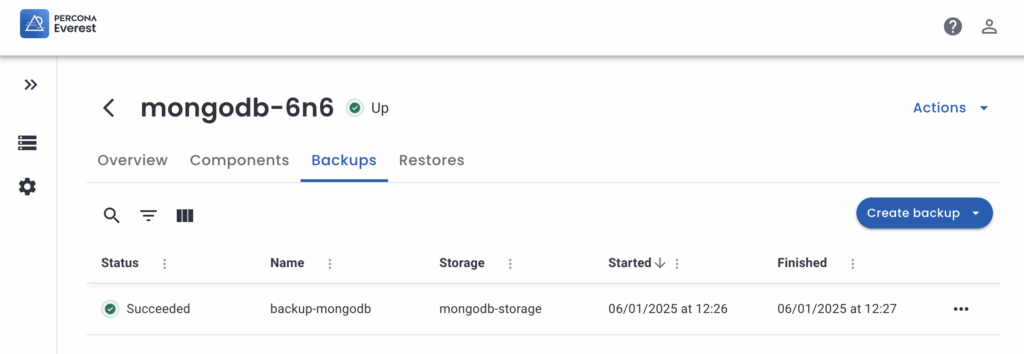
After performing a backup, Percona Backup for MongoDB (PBM) ensures that the data in your sharded MongoDB cluster is captured consistently across all shards and replica sets.
When restoring the data, PBM returns the entire cluster, including all shards and their respective replica sets, to a specific point in time. This process guarantees that all shards are synchronized, restoring the entire sharded environment without any inconsistency. Once the restore is complete, the sharded cluster will continue to function normally, with MongoDB redistributing data across shards according to the sharding key, maintaining optimal performance and data balance.
Managing and scaling databases effectively has never been more critical. With the rise of Kubernetes and open source tools such as Percona Everest and Percona Backup for MongoDB (PBM), organizations can now more efficiently manage, scale, and back up MongoDB, including sharded clusters with minimal effort and maximum reliability.
Percona Everest, with PBM already integrated, provides a friendly workflow for deploying and managing sharded MongoDB clusters while safeguarding critical data by ensuring data consistency and robust backups.
By integrating these tools, you can simplify the complexities of managing distributed databases and focus more on what matters – delivering value to your applications.
You can explore Percona Everest, install it in your Kubernetes environment, and start managing your sharded MongoDB clusters. If you’re looking for a reliable solution for MongoDB backups, PBM is an excellent tool to try. If you have any feedback, feel free to share it with us in our Percona forum.
Run MongoDB on your terms! We deliver secure, rigorously tested software that includes enterprise-grade advanced features such as encryption and backup, without traditional enterprise constraints.
Resources
RELATED POSTS