Intro
The purpose of this project was to measure the potential overhead of VividCortex Agent, which is used by VividCortex.com database monitoring system. This benchmark is part of a consulting engagement with VividCortex and paid by the customer.
The assumption is that VividCortex agent uses CPU processing time, and we should see an impact on user queries when the workload is CPU-intensive (how much is to be measured). The impact on IO-bound should be small or insignificant.
Workload Description
For this, we use LinkBenchX benchmark in a combination of different options.
Workloads
There are 3 different workloads we want to look into:
LinkBenchX modes
We use two modes in LinkBenchX
Agent modes
We wanted to compare the performance impact of VividCortex’s agent to PERFORMANCE_SCHEMA so we measured 4 combinations, of enabled/disabled in following ways:
"NO-PS" in charts
"with-PS" in charts
"NO-vc-agent" in charts)
"vc-agent" in charts)Summary
CPU bound
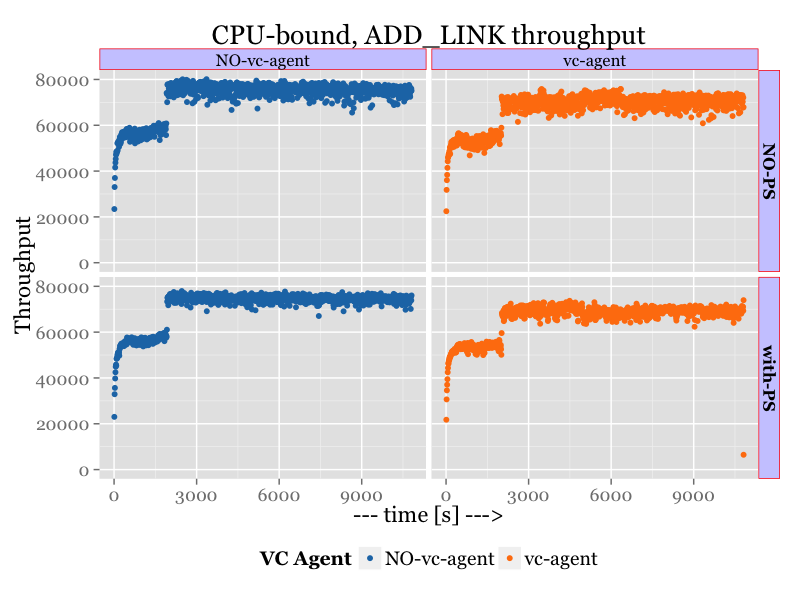
In the CPU bound workload, the impact from the enabling agent is the most significant.
Throughput impact:
PERFORMANCE_SCHEMA we see overhead 1.8% in throughput
vc-agent the overhead is 10.7% in throughput
PERFORMANCE_SCHEMA and vc-agent the overhead is 11.7% in throughputIt is worth to highlight, that in CPU-bound load, the vc-mysql-query agent’s CPU consumption is related to the amount of traffic it has to sniff and on CPU-bound workloads with high query traffic it can use up to a single CPU core. We did not benchmark a CPU-bound server with low query traffic. That’s why we decided to measure an impact of vc-agent in a case of limited amount of CPU available (say in a case of cloud or container server).
Response time impact:
on ADD_LINKS operation
PERFORMANCE_SCHEMA impact: added 20% to response time
vc-agent impact: added 42% to response time
PERFORMANCE_SCHEMA and vc-agent impact: added 63% to response timeon GET_LINKS_LIST operation
PERFORMANCE_SCHEMA impact: added 7.7% to response time
vc-agent impact: added 21.6% to response time
PERFORMANCE_SCHEMA and vc-agent impact: added 30.9% to response timeCPU bound (4 CPU cores are available)
In the CPU bound workload the impact from the enabling agent is the most significant.
PERFORMANCE_SCHEMA the overhead is 5% in throughput
vc-agent the overhead is 13% in throughput
PERFORMANCE_SCHEMA and vc-agent, the overhead is 17.8% in throughputResponse time impact:
on ADD_LINKS operation
PERFORMANCE_SCHEMA impact: added 14% to response time
vc-agent impact: added 52% to response time
PERFORMANCE_SCHEMA and vc-agent impact: added 84% to response timeon GET_LINKS_LIST operation
PERFORMANCE_SCHEMA impact: added 10% to response time
vc-agent impact: added 51% to response time
PERFORMANCE_SCHEMA and vc-agent impact: added 74% to response timeIO Bound
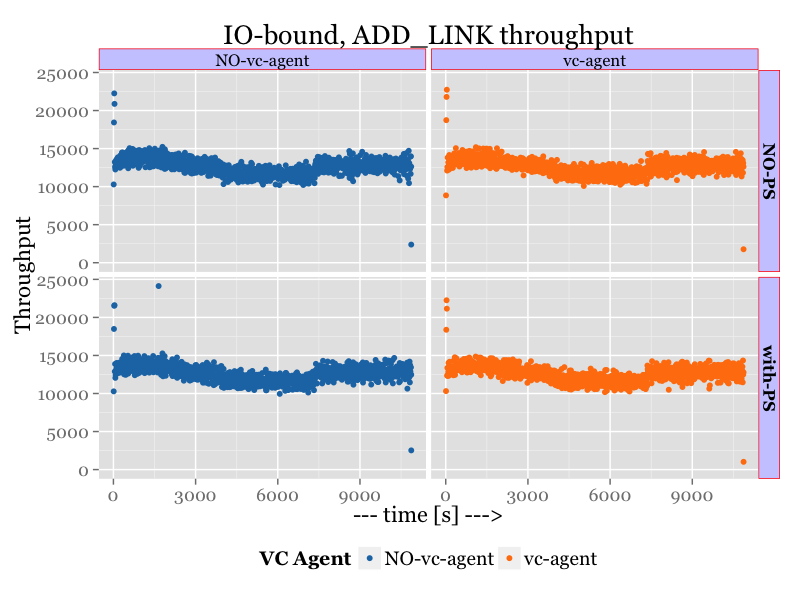
There is no statistical difference in throughput and response time when running with PERFORMANCE_SCHEMA enabled and/or with vc-agent.
Conclusion
The impact from running vc-agent and/or PERFORMANCE_SCHEMA might be negligible or significant, depending on your workload. Numbers above (the impact on throughput and response time) are border cases and might be used as low and high limits for estimation of impact. Most likely for a real workload the overhead will be in the middle.
There is no measurable impact from vc-agent in IO bound workload, but in CPU-bound you may want to make sure you have spare CPU cycles for vc-agent, as it is computation intensive and may add visible overhead to response times.
Supporting graphs.
CPU bound
Throughput timeline
Throughput summary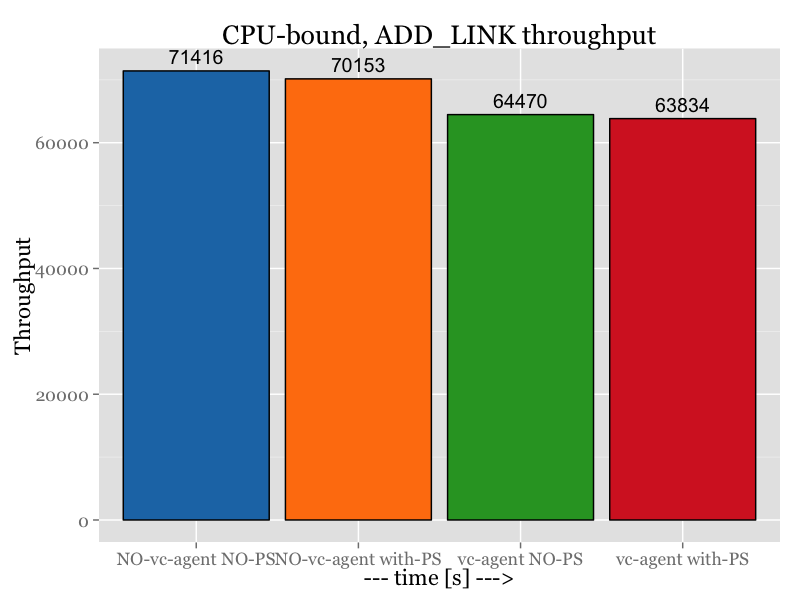
Response time density chart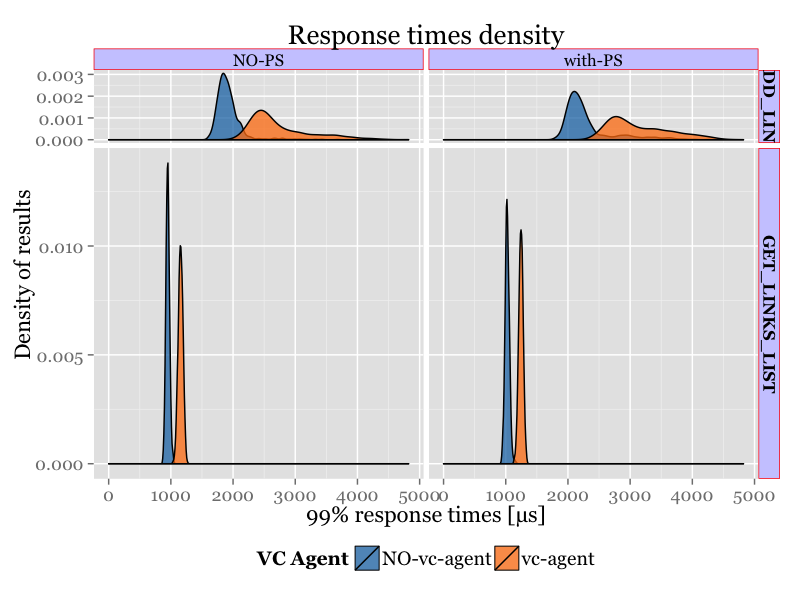
CPU bound (4 CPU available)
Throughput timeline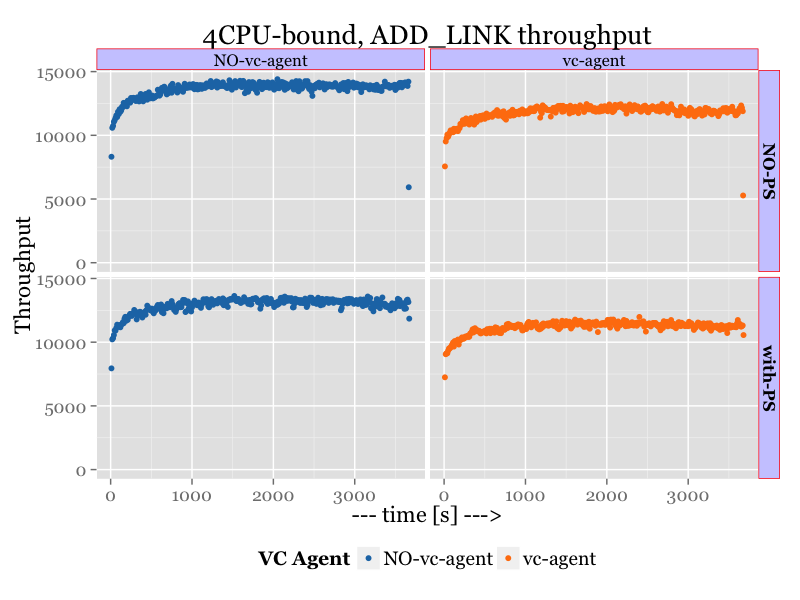
Throughput summary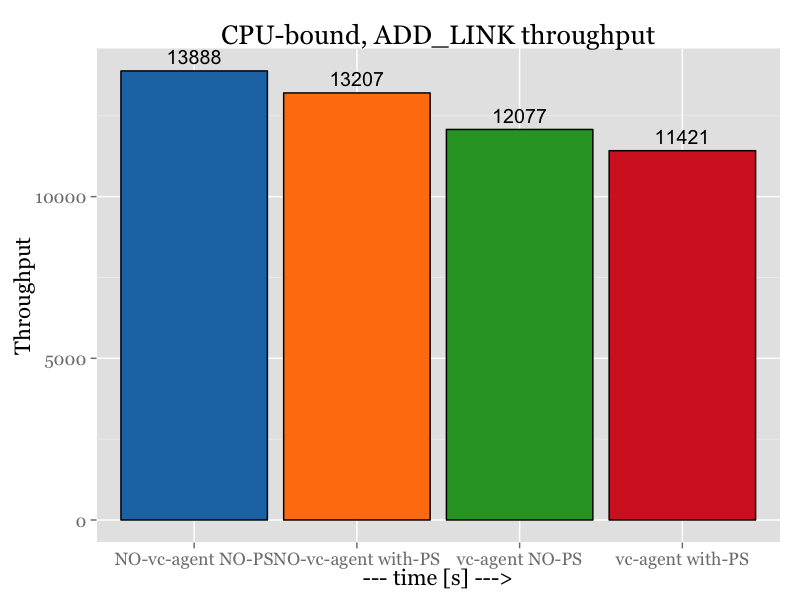
Response time density chart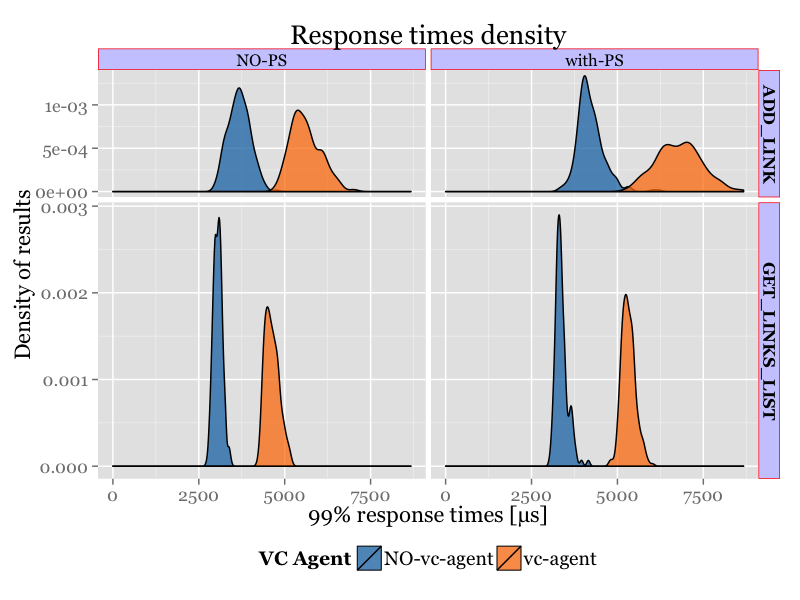
IO bound
Throughput timeline
Throughput summary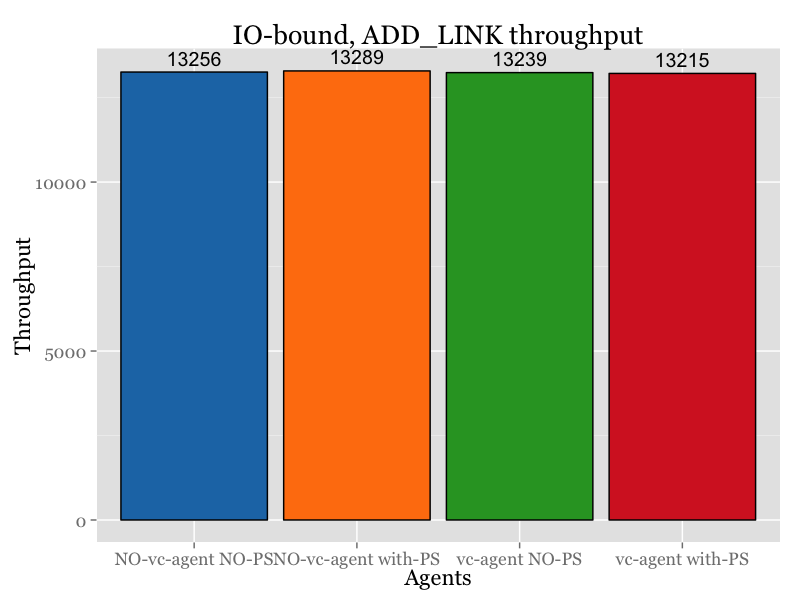
Response time density chart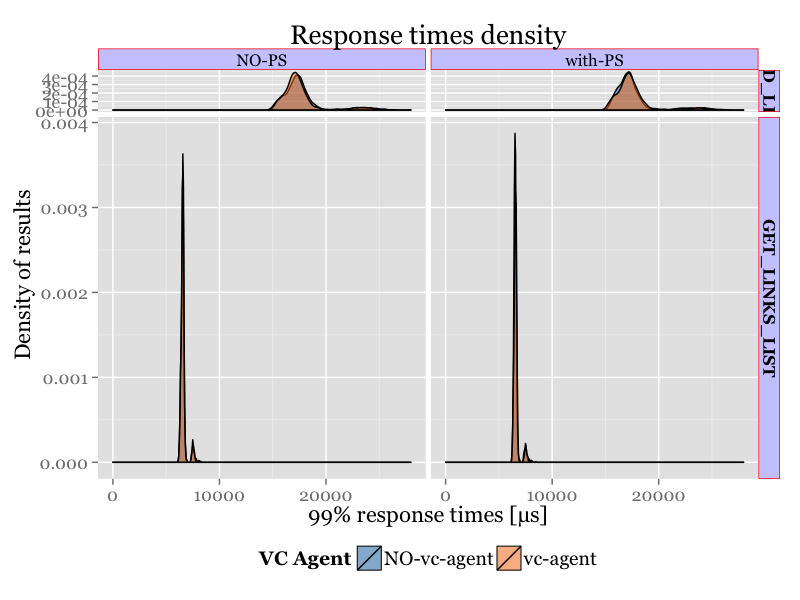
Resources
RELATED POSTS